


IKC becomes National Forum on Animal Cruelty
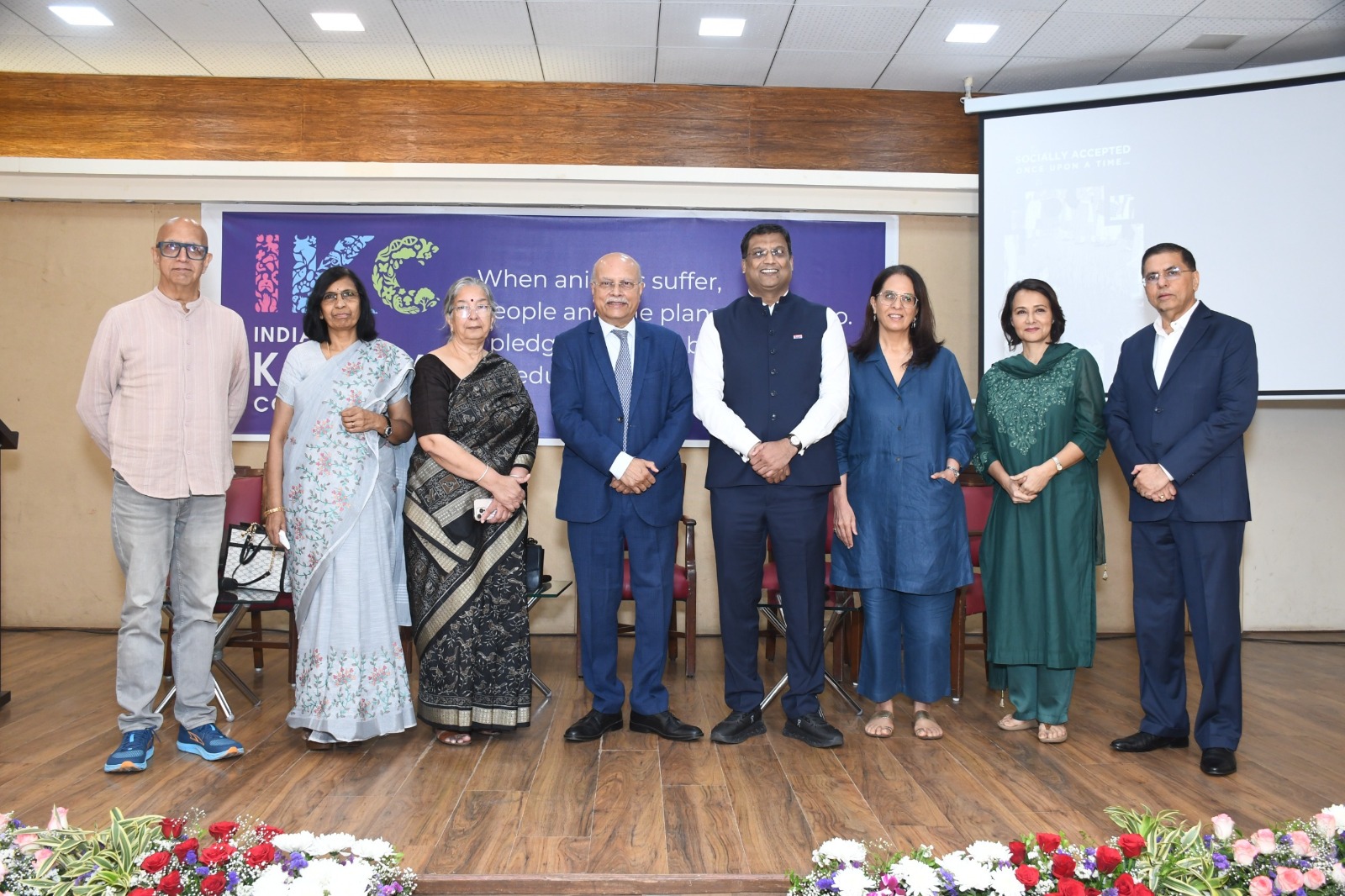
The launch of the India Karuna Collaborative (IKC) in Mumbai brought into focus the hidden costs of the modern food system, which have until now remained largely outside economic and policy discussions. India’s food and economic systems involve more than 1.5 billion farm animals, yet their welfare and associated cruelty are often overlooked. Launched under the “One Health, One Planet” vision, the platform will strive to incorporate animal welfare into discussions on climate, public health, and economic development.
More than 50 organizations and over 70 leaders from various sectors are involved in this initiative. Speaking at the event, Marico founder Harsh Mariwala said that this initiative is not just an appeal to compassion, but an effort to create a system in which compassion is inherently embedded in the processes of production, consumption, and innovation.
Motilal Oswal, Founder and Managing Director, Motilal Oswal Financial Services Limited and mentor of IKC, said, “This mutual crisis is so difficult to address because so much of it is deliberately kept invisible. We measure the production of milk, eggs, and meat, but we don’t measure the suffering and pain. The scale of this pain is staggering.”
New data released on this occasion shows that the general public is already aware and engaged on this issue. According to a nationally representative survey 2026, “They Feel, We Care: Young India’s Attitudes towards Farm Animals, Their Welfare, and a Plant-Based Diet,” commissioned by IKC, 70% of respondents believe that farm animals are sentient beings and experience pain. The survey also revealed that 69% of dairy consumers and over 50% of meat and egg consumers are willing to pay 10% or more in price for products that adopt higher standards of animal welfare. Additionally, 53% of participants said they were willing to replace some or all of the animal protein in their diet with plant-based alternatives. Commenting on this, Edward Hutasoit, General Manager (India and Indonesia) at YouGov, said, “Today’s Indian consumer is conscious, discerning, and values-driven. They recognize that animals feel emotions, they want transparency in production processes, and they expect brands and governments to take a leadership role in improving welfare standards in supply chains.”
During the panel discussion, Mr. Sanjiv Mehta, Executive Chairman, L Catterton India, said, “As meat production and antibiotic use increase, the economic and public health impacts are becoming more serious. Therefore, it is the responsibility of businesses to develop purposeful supply chains that apply the same standards of ethics, transparency, and sustainability that we embrace within our brands. After all, a healthy society and sustainable ecosystems are the foundation of long-term business success.”
Amala Akkineni, Founder, Blue Cross of Hyderabad, shared her thoughts, saying: “The challenges we face today, from animal suffering to environmental pressures and the growing burden on agriculture, are deeply interconnected.
Gauri Maulekhi, Trustee, People for Animals, said, “The way we raise animals for food is deeply linked to human health. Nearly 70% of antibiotics used worldwide are used in animal husbandry, primarily because animals are kept in highly dense and crowded conditions, where diseases spread easily. From antibiotic-laced feed given to farm animals to practices like sewage-based fish farming prevalent in some parts of India, the use of antibiotics is constantly increasing to sustain industrial food production. While this system keeps costs low, its long-term costs are far more serious, as it is rapidly promoting antimicrobial resistance and creating the risk of the emergence of deadly superbugs. This issue has been acknowledged at the highest levels, including through urgent remarks by the Honorable Prime Minister, yet it has not yet received the urgent and necessary attention it desperately needs.”