


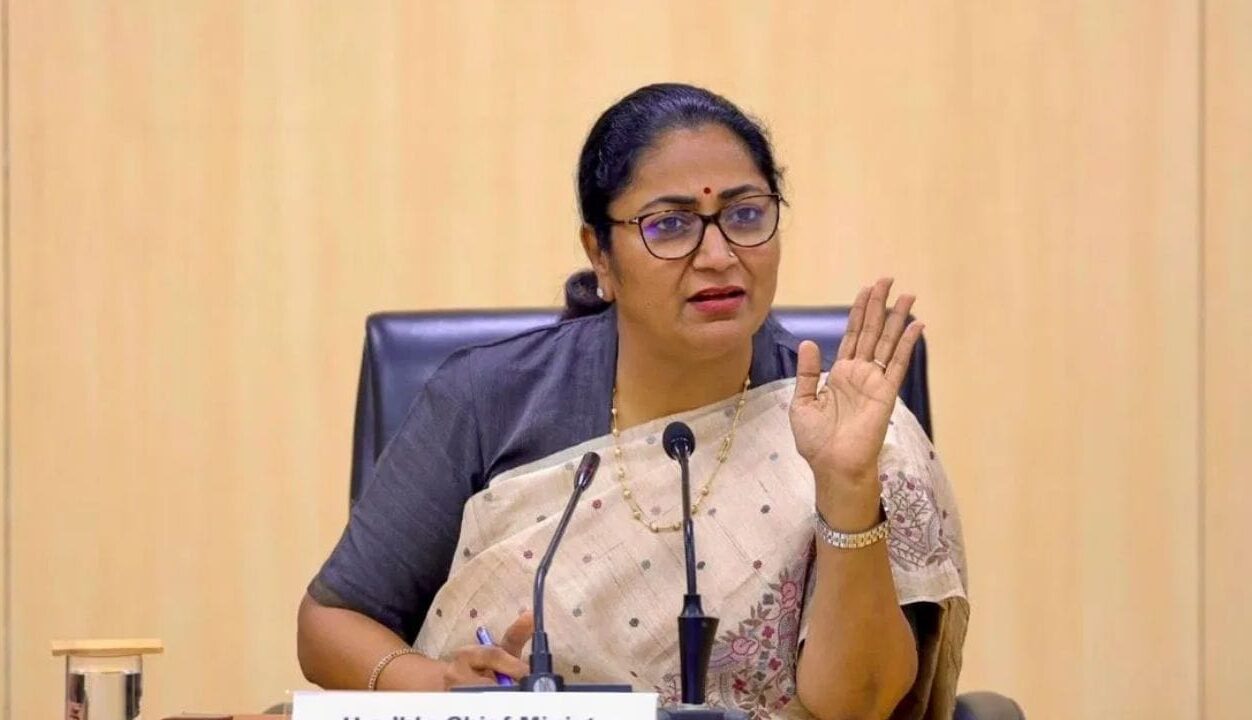
The Delhi government has taken a major and important decision regarding the Public Distribution System (PDS). Several important decisions related to ration cards were made at a cabinet meeting chaired by Chief Minister Rekha Gupta, directly impacting millions of families. The government has increased the annual family income limit for ration cards from ₹1 lakh to ₹2.5 lakh. This decision will now allow a large number of low- and lower-middle-income families to be covered under the government’s food security scheme. The Delhi government believes that the old income criteria are no longer sufficient, given the changing inflation and rising cost of living. Thousands of families in the capital live on limited incomes but were unable to avail themselves of the ration scheme due to the old income limit.
With the new limit in place, security guards, auto drivers, domestic workers, daily wage laborers, small shopkeepers, and low-paid workers in the private sector will also be able to benefit from this scheme. In the cabinet meeting, the government clarified that the Food Security Scheme’s objective is not only to provide rations to poor families, but also to provide relief to all needy families struggling with inflation and financial pressure. The government claims that this decision will provide millions of new families with access to wheat, rice, and other essential food items at affordable prices. The Delhi government has also announced the implementation of a digital system to increase transparency and accountability in the ration distribution system. Under the new system, funds will be transferred directly to beneficiaries’ bank accounts.
This process will be based on digital currency or Direct Benefit Transfer (DBT). The government says this will prevent irregularities, black marketing, and leakages in ration distribution. According to officials, in the future, the entire ration distribution system will gradually be operated digitally. Beneficiaries will receive a designated amount in their accounts and can use this amount to purchase rations. This will ensure benefits reach eligible individuals directly and eliminate the role of middlemen. The Delhi government says that the new technology-based system will not only reduce corruption but will also make the ration system more transparent and effective. Digital records will also make it easier to determine who is actually eligible for the scheme’s benefits and who is not.
7.71 lakh ration cards cancelled, investigation reveals several irregularities
The Delhi government also launched a large-scale inspection campaign to streamline the rationing system. According to government data, approximately 7.71 lakh invalid ration cards have been cancelled so far. The inspections uncovered numerous cases where eligibility rules were violated.
A government review revealed that approximately 1.44 lakh ration cards were in the names of people whose income exceeded the prescribed limit. Furthermore, approximately 35,800 card holders had not drawn any rations during the past year, indicating that they were either not using the scheme or their cards had become inactive. Another serious issue that surfaced during the investigation was that approximately 29,580 ration cards were registered in the names of deceased individuals.
The administration took such cases seriously and cancelled all invalid cards. The government says this action is a major step towards making the ration system transparent. The government also stated that no new ration cards had been issued for the past 13 years. Now, with the removal of invalid cards, the path is clear for new eligible families. The Delhi government has decided to launch an online application process so that eligible people can easily apply. Under the new system, the application process will be completely digitalized. This will eliminate the need for people to visit government offices and make the application process easier. The government claims that eligible families will be identified quickly and will be added to the ration scheme soon.
The decision to raise the income limit and implement a digital distribution system could prove to be a relief for millions of needy families in the capital. However, its successful implementation will require robust technical systems and transparent monitoring. The Delhi government states that its primary objective is to make the public distribution system corruption-free, transparent, and more effective for the needy. The government hopes that with the implementation of the digital system, ration benefits will reach only the rightful beneficiaries and fraud will be completely curbed