



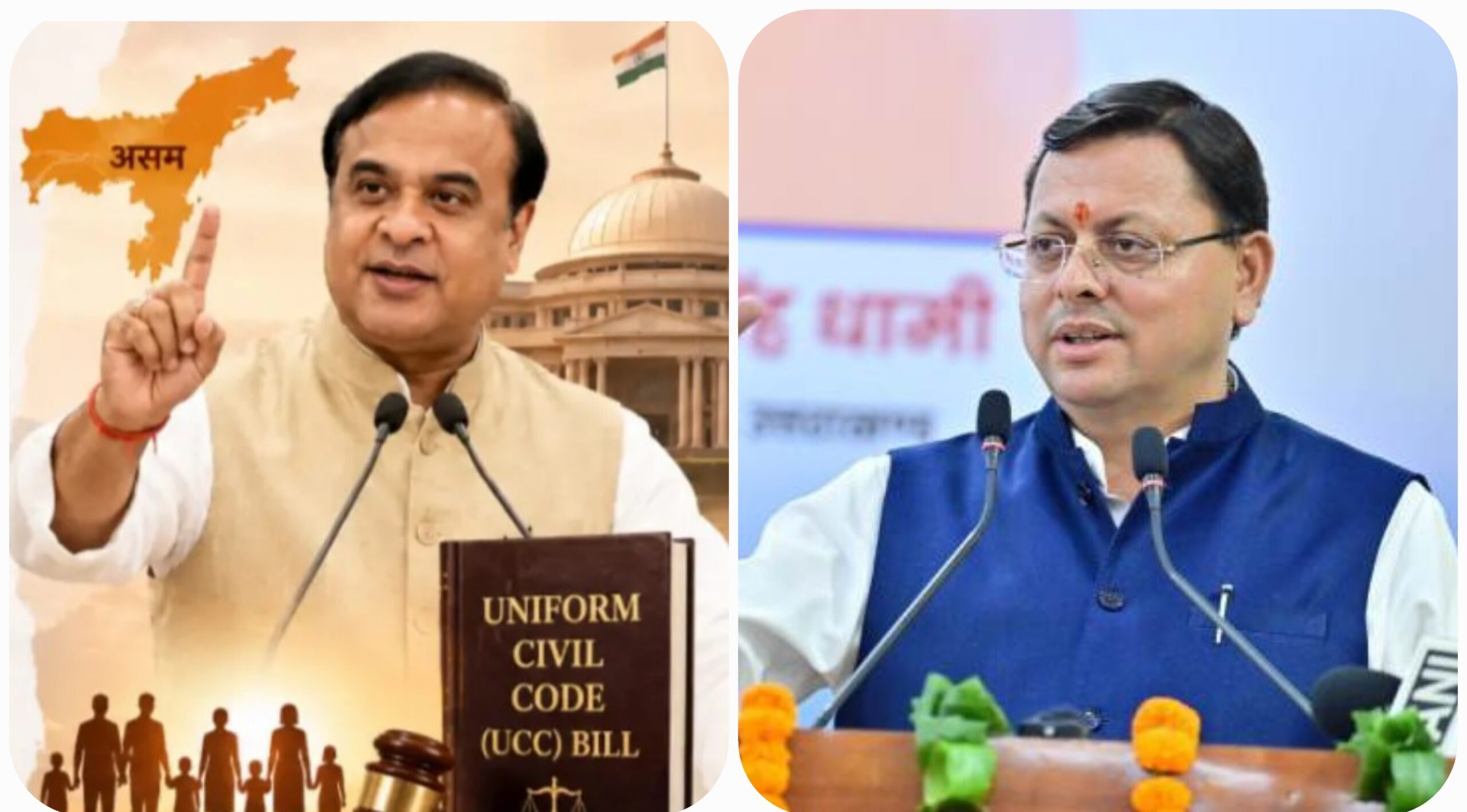
The Uniform Civil Code initiative, which began in Uttarakhand, is gradually becoming the basis for nationwide political and social change. What remained merely a matter of debate for decades is now becoming law in state legislatures. Uttarakhand first sparked a national debate by implementing the Uniform Civil Code (UCC). Then, Gujarat and now Assam have passed the law, signaling that many more states may follow suit in the future. In BJP-ruled states, it is being seen as a symbol of social equality, women’s rights, and a uniform justice system. When Chief Minister Pushkar Singh Dhami’s government in Uttarakhand decided to implement the Uniform Civil Code, it was considered not just a state law but a major national social and political experiment. The state government argued that different personal laws for different communities often deny women and children equal rights. Therefore, a uniform law for all citizens is essential in matters related to marriage, divorce, property, inheritance, and family disputes.
The Uttarakhand government underwent extensive preparations before implementing this law. An expert committee was formed, thousands of suggestions were received, and discussions were held in several stages. The government claimed that the law’s purpose was not to target any particular religion but to create an equality-based system in accordance with the spirit of the Constitution. The state government described this as a step in line with the Directive Principles of State Policy, which mandate equal laws for all citizens. The Uniform Civil Code implemented in Uttarakhand made registration of marriage and divorce mandatory. Live-in relationships were also brought under legal ambit. Special emphasis was placed on giving women equal rights in matters of property and inheritance. The government argued that family and social relationships in modern society require a clear legal framework to reduce future disputes and legal complications. After the implementation of this law in Uttarakhand, it sparked nationwide discussion.
The debate intensified among political parties, social organizations, and legal experts. Supporters hailed it as a major step toward women’s rights and social equality, while opposing groups questioned its role in religious freedom and cultural diversity. Despite this, the Uttarakhand government stood by its decision, calling it a historic decision for the state. Uttarakhand’s initiative showed other BJP-ruled states the path forward. This led Gujarat to also embark on a serious initiative toward a Uniform Civil Code. The Gujarat government initiated studies and legal proceedings on the subject. The state government argued that differing personal laws often complicate the judicial process and hinder women’s access to equal rights.
From live-in relationships to polygamy, Assam’s law has many stringent provisions.